Postpartum doesn’t end at six weeks.
And healing does not follow a neat timeline.
One of the most confusing parts of postpartum life is feeling emotionally unsettled even when everything looks “fine” on the outside. You might feel anxious, overstimulated, tearful, disconnected, or exhausted in ways that don’t make sense to you. Some days you may feel okay, even good. Other days your body feels like it is on high alert for no reason at all.
For many moms, this isn’t a personal failure or a faith issue. It is biology and the nervous system trying to recalibrate after a massive season of change.
Let’s talk about what is actually happening.
The Hormonal Shift After Birth
Pregnancy is one of the most hormonally intense experiences a woman’s body will ever go through.
During pregnancy, estrogen and progesterone levels rise significantly to sustain the baby and support your body. Within hours and days after birth, those hormones drop rapidly. This sudden shift alone can affect mood, sleep, anxiety levels, and emotional regulation.
At the same time:
Oxytocin fluctuates with breastfeeding and bonding
Cortisol often rises due to sleep deprivation and stress
Thyroid levels can shift
Blood sugar instability becomes more common
Nutrient stores may be depleted
Your body is not breaking down. It is adjusting after doing something extraordinary.
How Hormones Affect the Nervous System
Your nervous system is the communication highway between your brain and body. It constantly scans for safety or threat.
When hormones fluctuate rapidly and sleep is disrupted, the nervous system can become dysregulated. This means your body may stay stuck in a stress response even when there is no immediate danger.
This can look like:
Feeling on edge or easily overwhelmed
Racing thoughts or intrusive worries
Difficulty relaxing even when resting
Sensory overload from noise, touch, or stimulation
Sudden tearfulness or irritability
Feeling disconnected from yourself or others
This is not weakness. This is your body saying, “I’ve been through a lot and I need support.”
Postpartum and Survival Mode
Many postpartum moms are functioning in survival mode without realizing it.
You are caring for a newborn. You are likely sleep deprived. You may be healing physically. You are adjusting emotionally, mentally, and spiritually. You might be managing older children, household responsibilities, or homeschooling. Some moms are also navigating trauma, strained relationships, or emotional wounds beneath the surface.
Your nervous system does not separate these stressors. It feels them all.
When the nervous system stays in survival mode too long, your body stays flooded with stress hormones. Over time, this can make small things feel big and big things feel impossible.
Faith and the Nervous System
This is where many moms feel confused or ashamed.
You might love the Lord deeply, yet still feel anxious. You might pray, read Scripture, and trust God, but your body still feels dysregulated. You may even wonder if your faith is lacking.
It is not.
God created your nervous system. He designed your body to respond to stress and seek safety. Supporting your nervous system is not separate from faith. It is stewardship.
“The Lord is near to the brokenhearted and saves the crushed in spirit.” Psalm 34:18 ESV
God draws near in gentleness, not pressure.
What Regulation Actually Looks Like Postpartum
Healing your nervous system does not require perfection or drastic routines. It starts with safety.
Some practical supports that often help postpartum moms include:
Prioritizing Rest Without Guilt
Rest is not laziness. Rest is repair. Even small moments of intentional rest signal safety to your body.
Nourishing Your Body Consistently
Blood sugar swings can increase anxiety and emotional instability. Eating regular meals with protein, healthy fats, and minerals helps stabilize both hormones and mood.
Gentle Movement
Walking, stretching, or slow movement can calm the nervous system without depleting you further.
Limiting Overstimulation
Noise, screens, constant information, and pressure to “bounce back” can keep your system activated. Quiet matters.
Co-Regulation
Your nervous system often needs another calm presence to regulate. This may look like:
Sitting quietly with your baby
A trusted conversation
Prayer or worship that feels soothing rather than forceful
A Gentle Reminder for Moms Healing Postpartum
If you feel unlike yourself right now, you are not lost.
You are integrating. You are healing. You are learning how to live in a changed body and a changed season.
Healing is rarely loud. It is often slow, quiet, and unseen.
“My flesh and my heart may fail, but God is the strength of my heart and my portion forever.” Psalm 73:26 ESV
God’s strength does not override your nervous system. It sustains you as it heals.
You Are Not Behind
Postpartum healing is not linear. Nervous system healing is not instant. Faith does not require ignoring your body’s signals.
If this season feels heavy, allow yourself compassion. You are doing holy work in unseen ways.
You are not broken. You are not failing. You are becoming whole again, one regulated moment at a time.
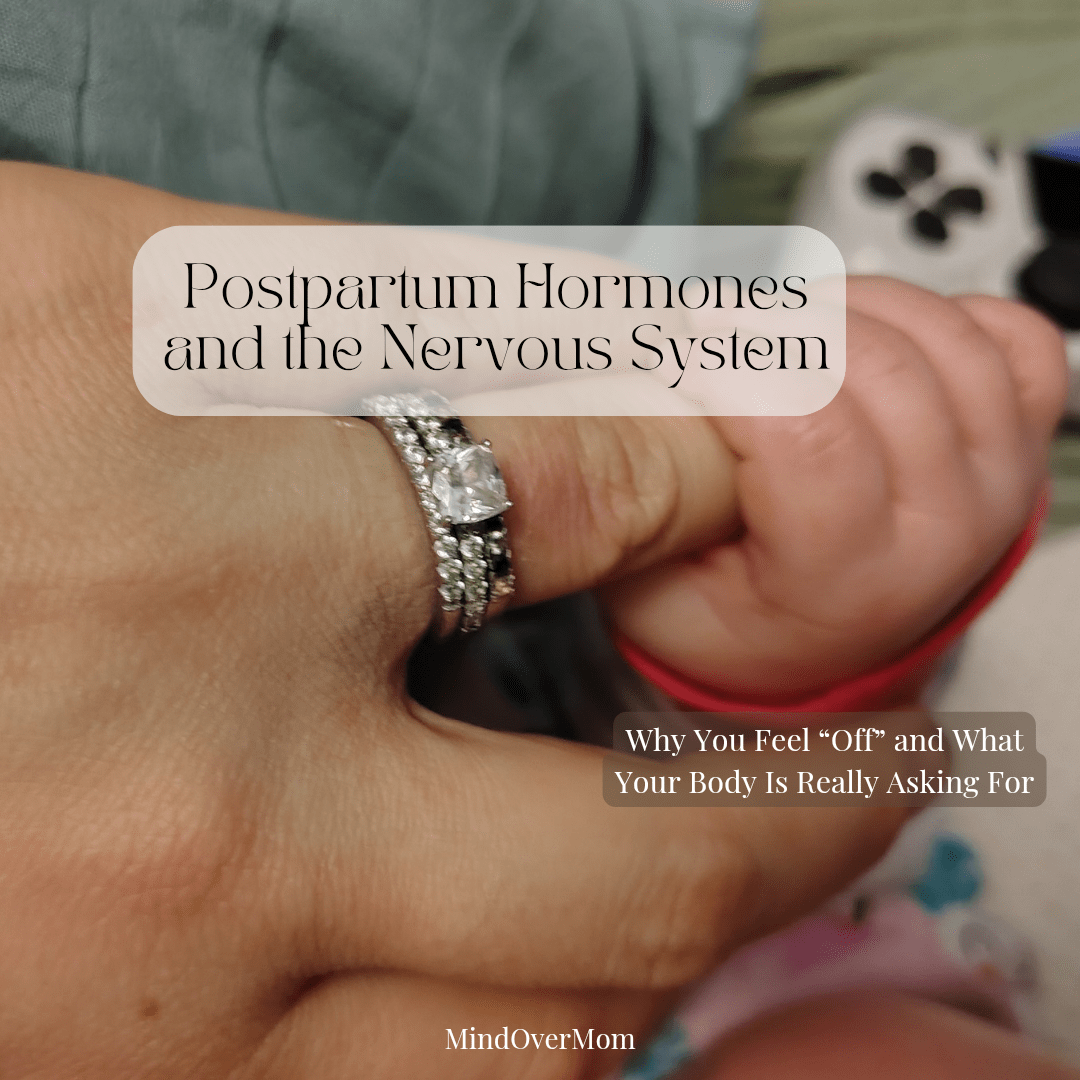
Postpartum Hormones and the Nervous System: Why You Feel “Off” and What Your Body Is Really Asking For
 Living Life with a Purpose